
Field Review | Artist Interview Series
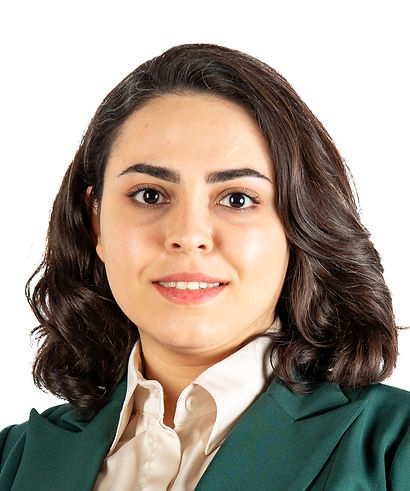
In conversation with
Elaheh Abbas Zadeh
Painting has been an inseparable part of my life since childhood. From the age of four, it has been more than an artistic activity for me; it has been a way of understanding, processing, and reconnecting with the world around me, as well as a space for solitude, introspection, and an escape from the constraints of time.
Over the years, experimenting with a wide range of materials and techniques—from watercolour, gouache, charcoal, and graphite to coloured pencils, oil, and acrylic—has contributed to the gradual development of my personal visual language. Although, because of my family’s beliefs, I never attended art school or formally studied art at university, I have continuously engaged with artistic ideas and practices, from architecture, interior design, and painting to photography, music, and singing. As a result, my artistic practice has developed slowly, consistently, and through experience. It continues to be rooted in observation, independent study, experimentation, intuition, engagement with artistic material and ideas, and a direct relationship with the physicality of materials.
In recent years, my paintings have increasingly focused on nature and the traces that encounters with it leave within my mind and emotions. Rather than representing nature as it appears, I am interested in translating what remains of an encounter after it has passed through memory and feeling. Light, shadow, texture, patterns, colour, and small details observed in nature—plants, landscapes, and people—often become the starting points for my work. Through the process of painting, these observations gradually transform into abstract layers of memory, sensation, and perception.
My working process is intuitive and largely physical. Through layering, pressing, dragging, and moving paint and material across the surface, I allow the image to emerge gradually. Forms may appear, disappear, and then resurface from within the painting, much like memories or experiences—some parts remain accessible to us, while others stay buried within the layers of the mind.
Living between the cultural contexts of Iran and Britain has also shaped the way I think about place, belonging, attachment, longing, memory, perseverance, and the idea of “home.” I am particularly interested in the question of how a landscape or a lived experience can continue to exist within us long after we have left a place behind.
Ultimately, painting is a way for me to release my thoughts and inner world onto the canvas. Through texture, colour, and abstract compositions, painting becomes a language through which I can express and communicate emotions that may otherwise resist words.
From:
United Kingdom
Artist Statement
My practice explores the lingering presence of nature: what remains within us after an encounter with a landscape, a colour, a texture, or a fleeting sensory experience. Rather than depicting nature as it appears, I am interested in translating its afterimage: the emotional, physical, and psychological traces it leaves behind.
Working with mixed media, I build densely textured surfaces through an intuitive and tactile process. I often use my hands directly, pressing, dragging, layering, and moving material across the surface. This physical contact is central to my practice. It allows the work to develop through touch, rhythm, pressure, and instinct, creating a direct relationship between body, material, and memory.
My paintings emerge through accumulation and transformation. Forms gather, dissolve, and reappear; colours collide and recede; surfaces shift between density and openness. At times, the works suggest petals, foliage, water, earth, or organic growth, yet they resist fixed representation. I am less interested in describing a particular place than in giving form to what persists after experiencing it: fragments of sensation, atmosphere, movement, and memory.
As an Iranian artist based in the UK, I am conscious of the ways memory and perception are shaped by movement between places, environments, and cultural contexts. Nature becomes, for me, both an immediate physical encounter and an internal space: something experienced in the present, yet layered with recollection, distance, and belonging.
Through painting, I seek a visual language for experiences that are difficult to articulate in words. Each work becomes a site where external landscape and internal memory meet, not as a record of nature, but as a translation of what nature leaves behind.
Tell us about yourself and your artistic background.
As I mentioned earlier painting has been an integral part of my life from an early age. I have developed my practice independently through years of observation, experimentation, self-directed study and a continuous engagement with art, design, architecture, photography and music.
Over the years, I have explored a wide range of materials. This gradual and experimental journey has shaped an intuitive visual language rooted in colour, texture, method and material.
In recent years, my work has focused on nature, memory and the emotional traces that places and experiences leave within us. Rather than directly representing what I see, I translate elements of light, shadow, texture, pattern and landscape into abstract compositions. Living between Iranian and British cultures has also shaped my relationship with place, belonging, longing and the idea of home.
For me, painting is both a physical and emotional process—a space where observation, memory and feeling can be transformed into colour, texture and form.

How would you describe your artistic practice?
My artistic practice is intuitive, process-led and rooted in observation, memory and emotion. I am drawn to nature and to the traces that landscapes, light, colour, texture and small details leave in my memory, rather than simply representing what I see.
I work primarily through painting, building, moving and disrupting layers of colour and material across the surface. Forms emerge, disappear and reappear throughout the process, much like fragments of memory. I allow each painting to evolve through experimentation and a physical engagement with the material rather than following a predetermined image.
My work moves between observation and abstraction, transforming experiences of nature, place and everyday life into colour, texture and form. Through painting, I explore memory, belonging, longing and the idea of home, while creating a space where thoughts and emotions that are difficult to express in words can take visual form.
What themes or ideas are most important in your work?
Since I began working abstractly, I no longer start a painting knowing what I want to create. I do not approach the canvas with a particular object, landscape or figure in mind; instead, anything can become part of the painting. I allow the work itself to tell me what it wants to become.
This may sound intuitive, but sometimes, even before I place the first colour on a white canvas, a title comes to me. When the painting is finished, I often realise how naturally the image and its title belong together.
What matters most in my work is feeling: the atmosphere created by colour, light and shadow, and the emotional qualities that colours seem to carry within themselves. These elements guide the painting and determine its direction. Rather than trying to control them completely, I see my role as helping them find their place—allowing colour, form and emotion to come together until the painting feels complete.

What inspires your creative process?
What inspires me most is painting itself—the desire to bring something new into existence. Each painting develops its own personality and atmosphere, becoming part of a larger world that I am continuously creating.
For me, the impulse to paint is deeply instinctive. I sometimes think of it in the same way we think about the human desire to bring a new life into the world: the need to create something that did not exist before, then watch it develop its own identity and presence.
Each finished painting inspires the possibility of the next, gradually expanding the world of my work. Ultimately, I paint because I feel a fundamental need to create—to give form and presence to something new.
Can you tell us about a recent artwork or project?
One of my recent paintings is titled Bold. When I began the work, I had one clear thought: I wanted to create a painting that would feel bold within a space. I chose a 61 × 72 cm canvas and prepared a selection of colours that, instinctively, felt as though they belonged together.
I began with a tomato-red ground, covering the entire canvas before introducing other strong, saturated colours. As the painting developed, something interesting happened: it seemed to resist any attempt to make one colour dominate or another recede. The colours wanted to coexist with equal presence, each holding its own energy while contributing to the whole.
By the time I finished, I imagined Bold inhabiting the home of someone who is unafraid of colour—someone who wants their space to express confidence, energy and a sense of daring.
For me, Bold became a clear example of the intuitive relationship I have with my work. I may begin with an intention, but at a certain point the painting develops its own character and begins to guide my decisions. In this case, it ultimately confirmed not only what it wanted to become, but also what it wanted to be called: Bold.
What challenges have influenced your development as an artist?
One of the most significant challenges has been finding a sustainable balance between making art and earning a living. Like many artists, I am deeply attached to my paintings, so selling them can be emotionally difficult. At the same time, if I want to continue creating, I have to let some of them go—not only because there is limited physical space, but because selling work helps support the materials and time needed to make the next painting. This has meant balancing my artistic practice with part-time work to maintain a stable income.
Another important challenge has been the tension between artistic intuition and the commercial side of being an artist. From a marketing perspective, there is often an expectation to understand your audience and create work that responds to a particular market. My process works differently. I want to give each painting the freedom to become what it needs to be, rather than deciding what it should look like based on what might sell.
Learning to navigate this tension—between creative freedom and the practical realities of sustaining an artistic practice—has been an important part of my development. It has encouraged me to trust my own visual language while also learning how to find an audience for the work without allowing the market to determine what I create.
What role does art play in your life today?
Art does not simply play a role in my life; it holds my life together. I believe that without art, something essential in us begins to fall apart.
And by art, I do not mean painting alone. I mean music, photography, cinema, architecture, design—the experience of looking at beauty, but also the ability to look at something difficult or even ugly and transform it into something meaningful. Art gives us ways to process what we feel, what we experience and what we cannot always express through words.
For me, art is not an addition to life; it is one of its foundations. In a world that can often feel increasingly driven by commerce, productivity and financial pressures, art creates a space where we can remain connected to emotion, imagination and our humanity.
That is why I do not think of art as having a particular “role” in my life. It is woven into the way I see, feel and understand the world. For me, art is not simply part of living—it is part of what makes life liveable.
What are you currently working on?
I am currently exploring abstract painting, which is a relatively new direction in my practice. Before this, I experimented with different approaches and materials, including drawing, portraiture, landscapes, acrylic and oil painting. Moving into abstraction has changed the way I understand both painting and my own creative process.
Interestingly, there was a time when I might have looked at an abstract painting and thought, “It is simply paint on a canvas—what does it mean?” Now, by working within abstraction myself, I am discovering how much meaning can exist without representing a recognisable person, object or landscape.
At the moment, I am particularly interested in allowing the painting to tell me what it wants to become. I work directly with my hands as well as tools, exploring how colours interact, how they sit beside or move through one another, and how texture, form and material can create their own emotional presence.
What fascinates me is that when each painting is finished, it seems to have developed its own character. It may not depict human suffering, the beauty of a flower, or a recognisable landscape, nor does it necessarily demonstrate an artist’s ability to reproduce the visible world through traditional drawing or representational skills. Instead, it reveals a different set of abilities: an understanding of colour and colour relationships, composition, balance, contrast, light and shadow, texture, rhythm, spatial awareness and, perhaps most importantly, visual sensitivity.
I am discovering that abstraction requires me to make decisions about how colours communicate with one another, where forms need space or tension, when a composition feels balanced and when it needs disruption. There may be no recognisable subject by which to judge whether something has been painted “accurately”, but there is still a visual language that needs to hold together.
For me, this is becoming one of the most fascinating aspects of abstraction: a painting does not need to represent something else in order to have meaning or beauty. It can exist as an experience in itself.
This is what I am exploring now: trusting colour, texture, intuition and the physical act of painting, and discovering how much can be communicated without representing the visible world.
What are your future goals as an artist?
My long-term goal is to build a sustainable and recognised career as an artist, where my practice can become my primary focus rather than something I have to balance around other work.
I want to continue developing a distinctive visual language—one that becomes recognisable as my own—and to exhibit my work more widely, connect with galleries, collectors and other artists, and gradually build an audience that genuinely connects with what I create.
I would love to reach a point where people not only recognise my name or my work, but actively look forward to seeing what I create next. For me, that kind of recognition is not simply about visibility; it means building a lasting relationship between my work and the people who respond to it.
Financial success is also part of that ambition. I want my work to be valued enough to sustain my practice, allowing me the freedom, time and resources to keep experimenting, take creative risks and continue growing as an artist.
Ultimately, I hope to build a body of work with a strong identity and a lasting presence—one that continues to evolve while remaining unmistakably mine.
Where can readers follow your work?
Readers can follow my work through my website (www.elahehabbaszadeh.com), where I share my paintings and developing practice, and on Instagram (@Elaheh_artstudio), where I post new works and glimpses of my creative process. My available works can also be found on Saatchi Art. I also use Pinterest to share visual work and photography that reflects the wider creative world surrounding my practice.
