

From Miniature to Monumental: How Middle Eastern Women Took Over the Canvas


They stitched protest, stitched poetry—and turned small acts into large statements
Introduction
In a region where tradition meets turbulence, many Middle Eastern women artists have transformed what was once small, decorative, or private—like miniature painting, textiles, embroidery—into expansive statements on identity, resistance, and visibility. These works are no longer confined to the drawing‑room; they erupt onto big canvases, public walls, and global stages. This post tracks how seven female artists turned the miniature into monumental, and small threads into bold statements.
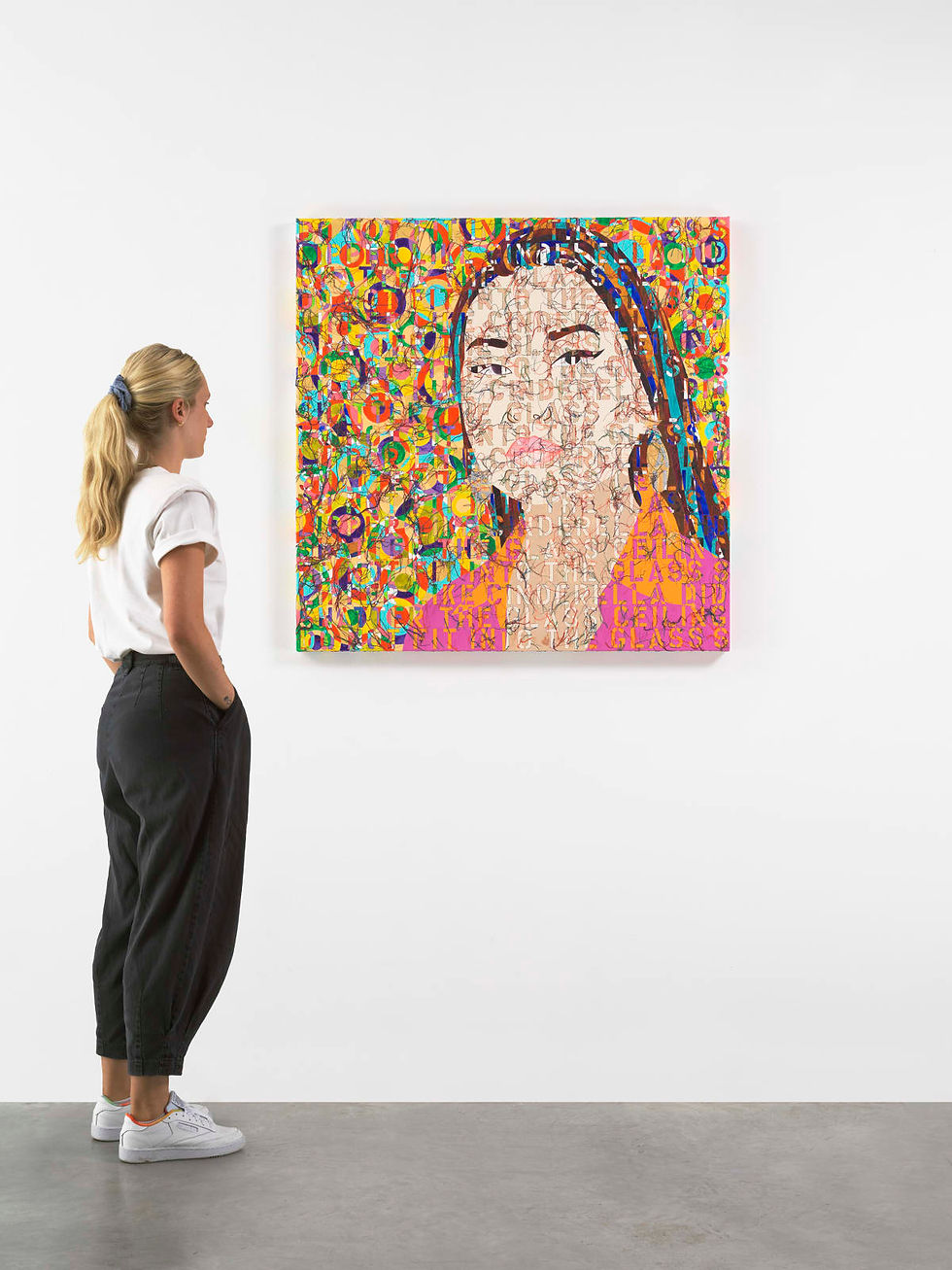
1. Ghada Amer (Egypt / USA)
Medium: Embroidery on canvas, painting, mixed media
Why Monumental: Amer uses needlework—traditionally considered “women’s craft”—over large canvases. She stitches images of female bodies, eroticism, and sensuality, often layering over abstract painting. Her work reclaims what has been marginalized.
Takeaway: Turning what many dismiss as “decorative” into protest, Ghada Amer forces public eye on private taboos.
2. Lulwah Al‑Homoud (Saudi Arabia / UK)
Medium: Calligraphy, mixed media, geometric abstraction
Why Monumental: Starting with calligraphic miniatures and paper works, she’s expanded into large abstract works using Arabic letters as texture, pattern, and spatial form. Her increasing scale transforms writing into architecture.
Takeaway: It’s not only what is written, but how space gives weight to words.
© Galerie Mond via Lulwah Al‑Homoud exhibition profile © Selections Arts Magazine
3. Shadia Alem (Saudi Arabia)
Medium: Installation, sculpture, painting, large‑scale public works
Why Monumental: Alem has created sweeping installations that envelop viewers—walls, structures, arches, negative space—all speaking to the lived experience of women in Saudi Arabia and beyond. Her scale forces viewers to move inside the art.
Takeaway: Monumental doesn’t always mean marble or bronze; it can be immersive, spatial, enveloping.
Shadia Alem official site – Incarnated Nature / Al Sarat collection Edge of Arabia – Artist Bio page
4. Wafa Hourani (Palestine / Jordan)
Medium: Ceramics, relief, sculpture
Why Monumental: Hourani moves from small ceramic tiles and detailed reliefs to large panels and walls. Her themes—memory, displacement, resilience—grow louder as her format expands.
Takeaway: As format grows, so does the emotional echo.
© Wafa Hourani / WePresent / STIRWorld © Wafa Hourani / Pinterest / public exhibit image

5. Aisha Khalid (Pakistan / working in regional MENA contexts)
Medium: Miniature tradition, textile, embroidery, large murals
Why Monumental: Incorporates the detailed precision of traditional South Asian/Middle Eastern miniature painting, but scales it up: murals, large installations,
public art. Sometimes embedding text, sometimes exquisite patterns, always blending decor and protest.
Takeaway: The roots of miniature bring tradition, the scale brings confrontation.
6. Etel Adnan (Lebanon / France)
Medium: Painting, large abstract landscapes, text
Why Monumental: Her color fields, sweeping skies, and inclusion of language and poetry (sometimes in Arabic) wrap sensation around scale. Even when they are “quiet,” their presence is undeniable.
Takeaway: Monumental can be silent: fields of color that loom.

7. Mona Hatoum (Palestine / UK)
Medium: Installation, sculpture, mixed media
Why Monumental: From small domestic objects to large spatial interventions, Hatoum often works in scale to highlight displacement, liminality, and political tension. She transforms the familiar (wire, metal, cloth) into structures that challenge and surround.
Takeaway: To dominate the canvas isn’t only to paint big—it’s to shift perspective.
Mona Hatoum portrait standing in studio, black & white
Conclusion Got From Middle Eastern Women
What once was miniature, ornate, restricted, or private is now loud, expansive, political. These women show how scale can amplify message. The shift from small format (miniature, embroidery, calligraphy) to monumental (large canvases, installations, public art) isn’t just stylistic—it’s a claim: of presence, of resistance, and of power.
Call to Action: Explore more detailed artist profiles on our Bolg and subscribe so you don’t miss new stories each month.


Comments