

The Hidden Symbols in Middle Eastern Women’s Art You’re Not Seeing

Why Hidden Symbols in Middle Eastern Women’s Art Matter More Than Meets the Eye
Symbols are the quiet vocabulary of Middle Eastern women’s art. They slip into a painting as a single eye, repeat across an embroidered dress as tiny pomegranates, or wing their way through a ceramic glaze as desert birds. At first glance they look decorative. Look longer and they speak—about protection, grief, fertility, migration, faith, and the stubborn joy of everyday life. This is cultural symbolism at work, carrying meaning from grandmother to granddaughter and from village to metropolis.
For collectors and museum-goers used to the language of Western contemporary art, these motifs can be easy to miss. But in the region’s women-led practices—embroidery, weaving, henna, ceramics, photography, and painting—symbolism isn’t a footnote; it’s the text itself. It turns domestic craft into a portable archive and transforms personal memory into collective history. When you learn to read this lexicon, the work reshapes itself before your eyes.
Across the Middle East and its diasporas, artists draw on deep currents—pre-Islamic folklore, Islamic aesthetics, Sufi poetry, Christian and Jewish traditions, and local customs. The same fruit or bird can carry multiple meanings, sometimes layered, sometimes contradictory. That complexity is the point. Symbols are not fixed labels; they are living tools to question, protect, and remember.
A Visual Lexicon Rooted in Home and History
For centuries, women have encoded family stories into textiles and surfaces. Embroidered dresses, woven kilims, tattoo patterns, and henna designs served as memory maps. A line of triangles might signal mountains left behind; a cluster of fruit could mark a marriage; an eye might guard the newborn. In many households, these “ornaments” doubled as a secret language for women to speak to each other across time and space.
The power of this language comes from its intimacy. Embroidery is done close to the body; henna is applied to hands that cook, wash, bless, and build. Ceramics pass through gatherings where stories circulate. When contemporary artists cite these motifs on canvas, in photographs, or in digital installations, they aren’t being nostalgic. They’re activating a network of references that link family rooms to galleries and streets to archives—a kind of intergenerational hyperlink.
Crucially, cultural symbolism in women’s work refuses the binary of “craft” versus “art.” A stitched pomegranate is both a meticulous design choice and a social document. A painted eye is both an aesthetic anchor and a talisman. The shift into contemporary art spaces expands the conversation: symbols once confined to bridal trousseaus or kitchen ceramics now face viewers in museums, public murals, and online platforms where new audiences can learn to read them.

The Watchful Eye: Protection, Power, and the Female Gaze
The most iconic symbol across the region is the eye—sometimes a single blue O (the nazar), sometimes an almond-shaped watcher repeated into pattern. In Middle Eastern women’s art, the eye is a shield. It’s worn as a pendant, stitched into hems, or painted above doorways to deflect envy and misfortune. When artists incorporate the eye into portraits, textiles, or ceramic vessels, they often draw on that protective force while also updating its meaning for the present.
On one level, the eye wards off harm. In societies where women’s visibility is negotiated daily—through dress, mobility, and public roles—the eye can be a way to assert safety without saying a word. On another level, it flips the script of the gaze. Instead of being looked at, the artist looks back. Eyes multiplied across a surface create a sense of surveillance reversed: the work watches you, asking who gets to see and who gets to define.
In contemporary art, the eye also records memory. Artists collage family photos so that an ancestor’s eye peeks through a veil of paint, or etch eye shapes into metal to suggest the persistence of witness. In war and displacement, the eye becomes an archive—the part of the body that carries what cannot be carried. Read this symbol, and you’ll often find the work is about safety, autonomy, and testimony all at once.
Fruit That Speak: Pomegranates, Figs, and Dates

Fruit in Middle Eastern visual culture is never just fruit. It is season, ritual, and story. Women artists turn pomegranates, figs, and dates into narrative devices—bright forms that smuggle complex histories into accessible images. The colors seduce; the meanings linger.
Pomegranate—Abundance, Memory, and Bloodlines
Crack a pomegranate and you get a constellation of seeds, each a small ruby. In women’s textiles and paintings, the pomegranate often signals fertility, abundance, and continuity. But it can also carry a note of loss: seeds stand for scattered families, for diaspora, for the branches of a family tree that no longer share a single courtyard. In Palestinian tatreez embroidery, pomegranate-inspired motifs echo hopes for home and lineage; in Persian-influenced work, the fruit’s crown and chambered body become micro-architecture for telling epic family histories.
Contemporary painters sometimes render the pomegranate split open, seeds spilling, to talk about both nourishment and wound. Photographers stage still lifes where pomegranates sit beside house keys or braids of hair, triangulating identity, home, and inheritance. In mixed-media collages, seeds transform into constellations, mapping the geography of migration across oceans and time zones.
Fig—Sensuality, Knowledge, and Shelter
The fig is quiet but potent. In regional poetry and scripture, the fig carries layers of meaning—taste, shade, and promise. Artists seize that flexibility. A fig leaf may refer to modesty and control of the body’s display; a ripened fig can signal sensuality on women’s terms. In Middle Eastern women’s art, a painted fig might be sliced to expose a glowing interior—an image of self-knowledge, not voyeurism.
Textile artists riff on the fig’s velvety skin through matte dyes and soft fibers. Ceramicists carve fig silhouettes into bowls used for daily meals, fusing nourishment with care. In conceptual projects, the fig tree’s deep roots become a diagram of persistence in difficult soils—perfect for narratives of displacement, resettlement, and the daily labor of making shelter.
Dates & the Palm—Resilience, Migration, and Hospitality
If the pomegranate is a jewel box, the date is a ration and a welcome. Palms mean water is near, that an oasis exists even when the horizon says otherwise. Women artists deploy date clusters to talk about survival—calories that fit in a pocket, sweetness rationed across a long journey. Dates also evoke hospitality: a plate at the door, a greeting that says you belong here.
In painting and print, the palm’s repeating fronds form protective canopies. In sculpture, cast dates become small monuments to endurance. A single date pressed into fabric before dyeing leaves a soft oval, like a thumbprint from an ancestor. Across contemporary art, dates mark the junction of migration and care, reminding viewers that survival isn’t abstract—it’s something you can hold in your hand.
Desert Birds in Flight: Migration, Spirit, and Direction
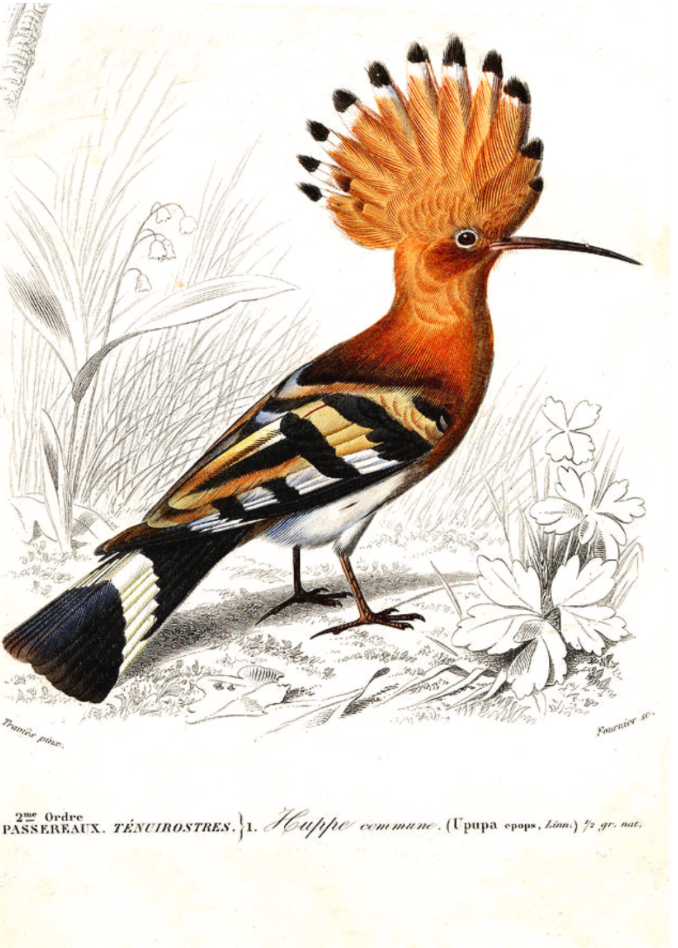
Birds populate the region’s symbolic sky, and women artists use them to chart movement and meaning. Each bird carries a distinct register: messenger, survivor, sovereign, returner. In many works, birds thread together themes of exile and homecoming, stitching personal routes onto wider histories of migration.
Hoopoe—Messenger and Guide
The hoopoe, with its crown-like crest, travels in literature and legend as a guide—clever, persistent, and slightly mischievous. Artists paint hoopoes as companions in self-portraits, or stencil their silhouettes into urban walls as directional signs. When a hoopoe perches on a threshold or window in a photograph, it often signals the artist’s search for direction: Which way next? What kind of home can be built in transit?
Doves and Sparrows—Fragility with Stamina
Doves promise peace, but in women’s hands they rarely appear naïve. A dove stitched in black thread against white fabric may acknowledge grief while holding space for hope. Sparrows, small and common, stand for survival without spectacle—the tenacity of everyday life. In installations where paper birds flood a room, the artist may be counting losses and departures while asserting a flock’s ability to reorganize mid-flight.
Falcon and Swallow—Precision and Return
Falcons carry prestige in Gulf iconography—speed, power, training. When women artists include falcons, they often sharpen questions of authority: Who owns the sky? Whose vision counts as mastery? Swallows, meanwhile, cue return. They come back season after season, an ideal emblem for diaspora projects that imagine circular time instead of permanent rupture.

From Motif to Message: Personal Stories, Collective Memory
How do these symbols turn into stories? Through composition and context. A single eye in an empty room can read as fear; dozens of eyes woven into a shawl look like a protective community. A pomegranate on a silver tray suggests celebration; one in a suitcase hints at displacement. In Middle Eastern women’s art, the arrangement does the storytelling.
Many artists treat the body as a map. Henna patterns migrate from hands onto canvases, tracing routes of courtship, marriage, childbirth, and mourning. Photographers overlay family recipes on portraits, using fruit and birds as chapter headings for culinary memoirs. Textile artists piece together fragments of wedding dresses, school uniforms, and refugee blankets into quilts where motifs become mile markers: an eye for a checkpoint, a palm for a safe house, a bird for a border crossed at dawn.
This is where contemporary art becomes a conversation: artists remix folk forms with video, performance, and sound. Recorded voices whisper proverbs while a projection of dates drops seed by seed. A digitally animated hoopoe navigates a 3D map of a grandmother’s hometown, asking viewers to follow. Symbols operate as interfaces, inviting us to click into memory rather than just admire surface beauty.

How to Read Cultural Symbolism Without Stereotypes
Reading symbols well requires humility. Start by suspending the urge to decode with a single answer. Ask: Who made this work? Where and when? What materials are used, and what do those materials mean locally? An eye painted in cobalt on a ceramic bowl from one community may function differently in a tapestry from another. Context isn’t optional; it’s the key.
Next, notice making. Is the pomegranate painted flat, stitched into relief, or cast in resin? Craft processes carry their own histories of women’s labor, community economies, and lineage. A motif borrowed from tatreez embroidery has social roots in specific villages and families. Recognizing that specificity honors artists’ research and situates the work inside a living practice, not a generic “Middle Eastern” label.
Finally, beware of single-story readings. Cultural symbolism thrives on double meanings: protection and exposure, abundance and loss, flight and return. Let the image remain a chord, not a single note. Listen to artists’ statements, curatorial essays, and community knowledge. When you do, the work opens—more layered, more human, more true to the complexities that Middle Eastern women’s art holds.
Where to See and Collect
Symbols need audience, and the ecosystem of galleries, fairs, and online platforms is expanding. Independent spaces spotlight women-led practices, create room for emerging voices, and host intergenerational dialogues. If you’re curious, look for exhibitions that pair historic textiles with contemporary art, or shows that invite artists to respond to heirloom objects from their families.
You can also discover thoughtful programs at galleries that champion artists from the region and diaspora. For instance, independent venues such as No. 35 Gallery in the UK showcase curated perspectives and open doors for new collectors and curious viewers alike. Explore upcoming shows and artist spotlights at https://www.no35gallery.co.uk/ to see how curators are framing symbolism for today’s audiences.
Collectors should ask about provenance and process, not just price. Who taught the stitch? What story does the bird or fruit carry in this particular work? When you buy with those questions in mind, you aren’t just acquiring an image—you’re investing in the survival of a language. Tag: Hidden Symbols in Middle Eastern Women’s Art
Quick Reference Table of Key Motifs
Motif | Common Forms | Core Meanings | In Contemporary Practice |
Eye (Nazar) | Single blue eye, almond shapes, repeated patterns | Protection, agency, witness, reversal of the gaze | Paintings that “look back,” textiles as protective cloaks, surveillance critiques |
Pomegranate | Whole fruit, split fruit, seed constellations | Fertility, abundance, lineage, diaspora | Collage seeds as maps, memorials to scattered families |
Fig | Whole, halved, fig leaf | Sensuality, self-knowledge, modesty, shelter | Soft fibers and matte glazes, portraits of interiority |
Dates / Palm | Date clusters, palm fronds, oasis scenes | Resilience, hospitality, migration routes | Cast dates as talismans, palm canopies for safe passage |
Desert Birds | Hoopoe, dove, sparrow, falcon, swallow | Guidance, peace, everyday survival, power, return | Directional murals, performance with bird calls, flight-path drawings |
Tips for Viewers, Curators, and SEO-Savvy Readers
Slow down. Give each motif time; meanings stack the longer you look.
Track repetition. A symbol repeated becomes rhythm—often a clue to ritual or prayer.
Read materials. Thread, clay, and henna are not neutral; they carry gendered labor and local economies.
Ask community. Artist talks, elders’ stories, and catalog essays prevent misreadings.
Connect keywords to context. When writing or searching, pair “symbolism” and “contemporary art” with named motifs (“pomegranate,” “nazar,” “hoopoe”) to discover deeper resources on Middle Eastern women’s art.
Final Thoughts
Learning the symbols in Middle Eastern women’s art is like learning a friend’s accent. Once you hear it, you can’t un-hear it. Eyes stop being generic ornaments and become sentries. Fruit stops being still life and becomes sustenance, lineage, and longing. Birds stop being background and become guides across borders and through time. This is the power of cultural symbolism: it lets artists hold contradictions without forcing a tidy answer.
As viewers and readers, we’re invited to meet the work halfway—bringing curiosity, respect, and a willingness to be surprised. When we do, the art answers with stories: about mothers teaching stitches at kitchen tables, about daughters remixing those stitches into installations, about communities that endure by carrying their sky and orchard and watchful protection with them. That’s what you’re not seeing—until you learn to look.


Comments